
[뉴스핌=이고은 기자] "지난 20년간 인터넷과 모바일의 확산을 통해 기술이 세상을 확 바꾼 것처럼 보였을지도 모른다. 그러나 이것은 시작에 불과하다."
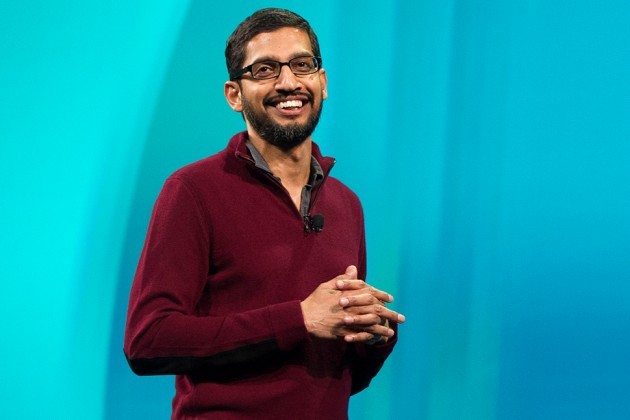
순다르 피차이 구글 최고경영자(CEO)가 28일(현지시간) 창업자 연례 서신(annual founder's letter)에서 한 말이다. 피차이는 래리 페이지에 이어 구글 2인자다.
연례 서신에서 피차이 CEO는 구글의 업적을 나열한 후 "이제 인공지능(AI)의 잠재성을 향해 곧장 나아가고 있다"고 말했다.
구글의 인공지능 시스템인 알파고는 지난 3월 이세돌 9단과의 대국에서 승리를 거두며 세계적 관심을 받은 바 있다. 피차이는 이를 두고 "이번 승리는 판도가 바뀌었다(game changing)는 것을 의미한다"면서 "궁극적으로는 인류의 승리"라고 말했다.
이어 "AI는 업무나 여행 같은 일상적인 과제는 물론 기후변화나 암 정복 같은 더 큰 과제도 도울 수 있을 것"으로 내다봤다.
피차이의 이 같은 발언은 AI에 대한 사회적 논쟁이 확산되는 과정에서 나왔다.
빌 게이츠 마이크로소프트(MS) 창립자와 엘런 머스크 테슬라 CEO, 스티븐 호킹 교수 등 유명인사들이 모두 AI 기술을 지지하는 것을 주저하거나 혹은 그 위험성에 대해 경고하고 있다. 마크 주커버그 페이스북 CEO만이 "우리는 AI를 두려워하지 않는다"고 지지의사를 표했다.
피차이 CEO는 "미래에는 디바이스(기기)라는 개념이 사라지는 단계가 올 것"이라면서 "대신 AI가 하루 종일 사람들을 도울 것이다. 모바일 퍼스트 시대에서 AI퍼스트 시대로 이동할 것"이라고 강조했다.
다음은 피차이 CEO의 서신 원문이다.
This year’s Founders' Letter
When Larry and Sergey founded Google in 1998, there were about 300 million people online. By and large, they were sitting in a chair, logging on to a desktop machine, typing searches on a big keyboard connected to a big, bulky monitor. Today, that number is around 3 billion people, many of them searching for information on tiny devices they carry with them wherever they go.
In many ways, the founding mission of Google back in ’98—“to organize the world’s information and make it universally accessible and useful”—is even truer and more important to tackle today, in a world where people look to their devices to help organize their day, get them from one place to another, and keep in touch. The mobile phone really has become the remote control for our daily lives, and we’re communicating, consuming, educating, and entertaining ourselves, on our phones, in ways unimaginable just a few years ago.
Knowledge for everyone: search and assistance
As we said when we announced Alphabet, “the new structure will allow us to keep tremendous focus on the extraordinary opportunities we have inside of Google.” Those opportunities live within our mission, and today we are about one thing above all else: making information and knowledge available for everyone.
This of course brings us to Search—the very core of this company. It’s easy to take Search for granted after so many years, but it’s amazing to think just how far it has come and still has to go. I still remember the days when 10 bare blue links on a desktop page helped you navigate to different parts of the Internet. Contrast that to today, where the majority of our searches come from mobile, and an increasing number of them via voice. These queries get harder and harder with each passing year—people want more local, more context-specific information, and they want it at their fingertips. So we’ve made it possible for you to search for [Oscar winner Leonardo DiCaprio movies] or [Zika virus] and get a rich panel of facts and visuals. You can also get answers via Google Now—like the weather in your upcoming vacation spot, or when you should leave for the airport—without you even needing to ask the question.
Helping you find information that gets you through your day extends well beyond the classic search query. Think, for example, of the number of photos you and your family have taken throughout your life, all of your memories. Collectively, people will take 1 trillion photos this year with their devices. So we launched Google Photos to make it easier for people to organize their photos and videos, keep them safe, and be able to find them when they want to, on whatever device they are using. Photos launched less than a year ago and already has more than 100 million monthly active users. Or take Google Maps. When you ask us about a location, you don’t just want to know how to get from point A to point B. Depending on the context, you may want to know what time is best to avoid the crowds, whether the store you’re looking for is open right now, or what the best things to do are in a destination you’re visiting for the first time.
But all of this is just a start. There is still much work to be done to make Search and our Google services more helpful to you throughout your day. You should be able to move seamlessly across Google services in a natural way, and get assistance that understands your context, situation, and needs—all while respecting your privacy and protecting your data. The average parent has different needs than the average college student. Similarly, a user wants different help when in the car versus the living room. Smart assistance should understand all of these things and be helpful at the right time, in the right way.
The power of machine learning and artificial intelligence
A key driver behind all of this work has been our long-term investment in machine learning and AI. It’s what allows you to use your voice to search for information, to translate the web from one language to another, to filter the spam from your inbox, to search for “hugs” in your photos and actually pull up pictures of people hugging … to solve many of the problems we encounter in daily life. It’s what has allowed us to build products that get better over time, making them increasingly useful and helpful.
We’ve been building the best AI team and tools for years, and recent breakthroughs will allow us to do even more. This past March, DeepMind’s AlphaGo took on Lee Sedol, a legendary Go master, becoming the first program to beat a professional at the most complex game mankind ever devised. The implications for this victory are, literally, game changing—and the ultimate winner is humanity. This is another important step toward creating artificial intelligence that can help us in everything from accomplishing our daily tasks and travels, to eventually tackling even bigger challenges like climate change and cancer diagnosis.
More great content, in more places
In the early days of the Internet, people thought of information primarily in terms of web pages. Our focus on our core mission has led us to many efforts over the years to improve discovery, creation, and monetization of content—from indexing images, video, and the news, to building platforms like Google Play and YouTube. And with the migration to mobile, people are watching more videos, playing more games, listening to more music, reading more books, and using more apps than ever before.
That’s why we have worked hard to make YouTube and Google Play useful platforms for discovering and delivering great content from creators and developers to our users, when they want it, on whatever screen is in front of them. Google Play reaches more than 1 billion Android users. And YouTube is the number-one destination for video—over 1 billion users per month visit the site—and ranks among the year’s most downloaded mobile apps. In fact, the amount of time people spend watching videos on YouTube continues to grow rapidly—and more than half of this watchtime now happens on mobile. As we look to the future, we aim to provide more choice to YouTube fans—more ways for them to engage with creators and each other, and more ways for them to get great content. We’ve started down this journey with specialized apps like YouTube Kids, as well as through our YouTube Red subscription service, which allows fans to get all of YouTube without ads, a premium YouTube Music experience and exclusive access to new original series and movies from top YouTube creators like PewDiePie and Lilly Singh.
We also continue to invest in the mobile web—which is a vital source of traffic for the vast majority of websites. Over this past year, Google has worked closely with publishers, developers, and others in the ecosystem to help make the mobile web a smoother, faster experience for users. A good example is the Accelerated Mobile Pages (AMP) project, which we launched as an open-source initiative in partnership with news publishers, to help them create mobile-optimized content that loads instantly everywhere. The other example is Progressive Web Apps (PWA), which combine the best of the web and the best of apps—allowing companies to build mobile sites that load quickly, send push notifications, have home screen icons, and much more. And finally, we continue to invest in improving Chrome on mobile—in the four short years since launch, it has just passed 1 billion monthly active users on mobile.
Of course, great content requires investment. Whether you’re talking about Google’s web search, or a compelling news article you read in The New York Times or The Guardian, or watching a video on YouTube, advertising helps fund content for millions and millions of people. So we work hard to build great ad products that people find useful—and that give revenue back to creators and publishers.
Powerful computing platforms
Just a decade ago, computing was still synonymous with big computers that sat on our desks. Then, over just a few years, the keys to powerful computing—processors and sensors—became so small and cheap that they allowed for the proliferation of supercomputers that fit into our pockets: mobile phones. Android has helped drive this scale: it has more than 1.4 billion 30-day-active devices—and growing.
Today’s proliferation of “screens” goes well beyond phones, desktops, and tablets. Already, there are exciting developments as screens extend to your car, like Android Auto, or your wrist, like Android Wear. Virtual reality is also showing incredible promise—Google Cardboard has introduced more than 5 million people to the incredible, immersive and educational possibilities of VR.
Looking to the future, the next big step will be for the very concept of the “device” to fade away. Over time, the computer itself—whatever its form factor—will be an intelligent assistant helping you through your day. We will move from mobile first to an AI first world.
Enterprise
Most of these computing experiences are very likely to be built in the cloud. The cloud is more secure, more cost effective, and it provides the ability to easily take advantage of the latest technology advances, be it more automated operations, machine learning, or more intelligent office productivity tools.
Google started in the cloud and has been investing in infrastructure, data management, analytics, and AI from the very beginning. We now have a broad and growing set of enterprise offerings: Google Cloud Platform (GCP), Google Apps, Chromebooks, Android, image recognition, speech translation, maps, machine learning for customers’ proprietary data sets, and more. Our customers like Whirlpool, Land O’Lakes and Spotify are transforming their businesses by using our enterprise productivity suite of Google Apps and Google Cloud Platform services.
As we look to our long-term investments in our productivity tools supported by our machine learning and artificial intelligence efforts, we see huge opportunities to dramatically improve how people work. Your phone should proactively bring up the right documents, schedule and map your meetings, let people know if you are late, suggest responses to messages, handle your payments and expenses, etc.
Building for everyone
Whether it’s a developer using Google Cloud Platform to power their new application, or a creator finding new income and viewers via YouTube, we believe in leveling the playing field for everyone. The Internet is one of the world’s most powerful equalizers, and we see it as our job to make it available to as many people as possible.
This belief has been a core Google principle from the very start—remember that Google Search was in the hands of millions long before the idea for Google advertising was born. We work on advertising because it’s what allows us to make our services free; Google Search works the same for anyone with an Internet connection, whether it is in a modern high-rise or a rural schoolhouse.
Making this possible is a lot more complicated than simply translating a product or launching a local country domain. Poor infrastructure keeps billions of people around the world locked out of all of the possibilities the web may offer them. That’s why we make it possible for there to be a $50 Android phone, or a $100 Chromebook. It’s why this year we launched Maps with turn-by-turn navigation that works even without an Internet connection, and made it possible for people to get faster-loading, streamlined Google Search if they are on a slower network. We want to make sure that no matter who you are or where you are or how advanced the device you are using … Google works for you.
In all we do, Google will continue to strive to make sure that remains true—to build technology for everyone. Farmers in Kenya use Google Search to keep up with crop prices and make sure they can make a good living. A classroom in Wisconsin can take a field trip to the Sistine Chapel … just by holding a pair of Cardboard goggles. People everywhere can use their voices to share new perspectives, and connect with others, by creating and watching videos on YouTube. Information can be shared—knowledge can flow—from anyone, to anywhere. In 17 years, it’s remarkable to me the degree to which the company has stayed true to our original vision for what Google should do, and what we should become.
For us, technology is not about the devices or the products we build. Those aren’t the end-goals. Technology is a democratizing force, empowering people through information. Google is an information company. It was when it was founded, and it is today. And it’s what people do with that information that amazes and inspires me every day.
Sundar Pichai, CEO, Google
<자료: 구글 공식 블로그>
[뉴스핌 Newspim] 이고은 기자 (goeun@newspim.com)