

미국 연준의 향후 통화정책 경로에 대한 중대한 실마리가 조만간 나올 예정이다. 이달 19일은 연준의장이 다시 의회에 나서 통화정책 전망에 대해 증언하는 날이다.이미 중립금리 수준에 도달한 연방금리와 향후 경기둔화 및 인플레 압력 상승 우려 속데 금융시장은 연준의 향후 행보에 대해 갈피를 잡지 못하고 있다.이 가운데 지난 4월 의회증언 이후 지금까지 몇 차례 신뢰성 실추 사태를 경험한 벤 버냉키(Ben S. Bernanke) 연준의장은 이번 증언대를 새로운 신뢰성을 획득할 기회로 삼아야 할 것이라는 '충고'가 나와 눈길을 끈다.미국 대형투자은행 모건스탠리(Morgan Stanley)의 수석 이코노미스트 스티븐 로치(Stephen Roach)는 화요일 버냉키 의장에게 보내는 공개편지를 제출했다.로치는 이 편지에서 "신뢰성이 없으면 중앙은행은 아무 것도 아닌 존재가 된다"며, 글로벌 금융 경제의 전체적인 매락 속에서 주도력을 행사하고 있는 버냉키가 아마도 "거의 마지막 기회가 될 이번 의회 증언에서" 좀 더 알아듣기 쉬운 말로 자신의 "정책 성향(bias)"을 올바로 드러냄으로써 실추한 신뢰를 다시 되찾으면 좋겠다고 충고했다.여기서 로치는 그린스펀 시대의 한 페이지를 장식했던 틀로 간단하게 "긴축 성향" 혹은 "완화 성향"을 드러내는 것이 좋을 것이라며, 이처럼 정책 성향을 드러내는 것은 정책금리가 이른바 중립수준을 넘어서고 있을 때 최선의 결과를 나타낼 수 있을 것이라고 주장했다.한편 로치는 "중앙은행의 정책운용은 과학적인만큼 동시에 기예(art)에 가까운 것"이라며, 연준이 소비자물가 목표치와 같은 제한적인 물가안정 목표에 국한되지 않고 유럽과 일본 그리고 중국 등 주요국 중앙은행들과 함께 글로벌 불균형과 그 배경인 과잉 유동성을 제거하기 위해 노력해야 할 것이라고 지적했다.그는 이런 목적 때문이라면 원칙적으로 좀 더 강한 긴축 성향을 유지해야 할 것이라며, 이른바 "그린스펀 풋(Greenspan Put)"이라고 지칭되는 도덕적해이를 억제할 수만 있다면 이 같은 정책리스크는 충분히 감내할만한 가치가 있을 것이라고 강조했다.아래는 로치가 버냉키에게 쓴 공개편지 원문이다.An Open Letter to Ben Bernanke Stephen Roach Dear Ben,It’s time to take a deep breath. You are off to a rocky start as Chairman of the world’s most powerful central bank. Your policies are not the problem. Given the über accommodative legacy you inherited from your legendary predecessor, the three 25 bp rate hikes in each of the three policy meetings you have chaired have made good sense. The issue is more subtle —- your ability to send a consistent message to financial markets. This is a critical element of your job description. It defines your credibility as a policy maker as well as the credibility of the great institution you now lead. In the end, without credibility, a central bank is nothing.You know this, of course. As one of the world’s leading academic apostles of inflation targeting, you have long stressed the merits of anchoring financial market expectations of monetary policy with a simple price rule. With price stability now widely accepted as the sine qua non of central banking and with core inflation rates in the US and around the world not all that far away from the hallowed ground of price stability, there is considerable merit in underscoring a determination to preserve the hard-won gains of the past 25 years. This could well be your golden opportunity.With all due respect, Ben, you are close to squandering that opportunity. A transparent policy rule has real merit in minimizing unexpected and undesired swings in financial markets. But any such rule is as good as its disciplinarians — the central bankers who are charged with delivering the message to the public at large. It pains me to say this, but your message has been all over the place. What I am alluding to are several reversals in your official pronouncements in the past couple of months. It all started with your 27 April testimony before the Joint Economic Committee of the US Congress, where you openly entertained the possibility of an “unjustified pause” in the Fed’s monetary tightening campaign. That was followed by your 5 June speech at an International Monetary Conference in Washington DC that sent a clear warning about your concerns over “unwelcome developments” on the inflation front. Then there was the policy statement immediately after the 28-29 June FOMC meeting, underscoring the Fed’s forecast that a “…moderation in the growth of aggregate demand should help to limit inflation pressures over time.” Nuanced or not, in this brief two-month time span, your official statements have gone from dovish to hawkish and back to dovish again. Such inconsistencies raise serious questions about your credibility as the world’s leading monetary policy maker.Speaking of that, you and your colleagues at the Fed must be mindful of the international context and consequences of your posture. Your back-and-forth waffling comes at a critical juncture in the global monetary tightening cycle. Jean-Claude Trichet of the ECB surprised the markets with his own tough talk last week — in effect, pre-announcing another rate hike for August, a month when Europe is normally at the beach. At the same time, the Bank of Japan’s Governor Toshihiko Fukui has also been talking tough for several months, signaling the end of a seven-year zero-interest rate regime and the onset of a long-awaited normalization of Japanese monetary policy. His first step could well be imminent — most likely at the BOJ’s upcoming 14 July policy meeting. Ben, that puts the consequences of your recent reversals in a very different context. Global investors are perfectly comfortable with the notion that the Fed, which began its tightening campaign long before other major central banks, would be the first to attain its objectives. The idea of the “policy catch-up” by foreign central banks has long been embedded in the consensus view of a cyclical dollar weakening. However, to the extent that the European and Japanese central banks stay on message while you do not, the monetary policy credibility factor could well shift away from the United States. Given America’s outsize current account deficit, a relative credibility erosion could spell sharp downward risks to the dollar — and equally sharp upside risks to real long-term US interest rates. That’s the last thing an asset-dependent, overly-indebted US consumer needs. A resumption of the greenback’s weakness in recent days suggests that you can’t take this possibility lightly.It was always going to be difficult to wean the markets from the measured Fed tightening campaign that has unfolded without interruption over the past 24 months. When the federal funds rate was 1% in June 2004, the next move was a no-brainer. But now at 5.25%, it is obviously much trickier. The key for you is not to let your understandable sense of uncertainty over the economic and inflation outlook morph into an on-again, off-again assessment of policy risks. This was supposed to be the sweet spot in the policy cycle for inflation targeters like yourself. Lay out the metric you are targeting, provide a clear assessment of the risks, and then let the policy rule generate the unambiguous answer. Easier said than done, I guess. I think the best thing you can do at this point is to borrow a page from the Greenspan era and make a simple statement of your policy bias. For example, as long as you perceive inflation risks to be on the upside of your tolerance zone, you and your colleagues can endorse a tightening bias. Conversely, if inflation risks tip to the downside, it may be appropriate at some point to announce an easing bias. The bias statement works best when the policy rate is near the so-called neutrality threshold. It is less appropriate when the overnight lending rate is far away from such an equilibrium. In the current context, the verdict would be clear — a tightening bias is in order until inflation risks recede. There’s nothing automatically actionable about such a bias that locks you into a move at each and every policy meeting. There is ample leeway to pass on a policy move and still maintain your concerns. There may well be a silver lining in your unfortunate experience of the past couple of months. Central banking is as much art as it is science. In that vein, it is equally important to be mindful of one of the major pitfalls of the current financial market climate — seven years of one asset bubble after another, driven by the mother of all liquidity cycles. It is high time to bring this dangerous state of affairs to an end. These are the same bubbles that spawn wealth-dependent distortions to saving and massive global imbalances. Not only must you commit to price stability in the narrow sense of your CPI target, but you and your central banking colleagues in Europe, Japan, and China must be equally willing to commit to an orderly withdrawal of excess liquidity in order to put a seriously unbalanced world on safer footing. That underscores my recommendation to maintain a tighter policy bias at low rates of inflation than a strict price rule might otherwise imply. If that’s what it takes to break the moral hazard of the “Greenspan put,” it is a risk well worth taking.I guess in retrospect we should have seen this coming. After all, history tells us that transitions to a new Fed Chairman invariably don’t go well. The “transition curse” saw the equity market quickly challenging Alan Greenspan with the Crash of 1987, the bond market promptly testing Paul Volcker, and a dollar crisis immediately confronting G. William Miller. The so-called risk reduction trade, which commenced in early May, could well go down in history as the Bernanke test. There’s nothing like unforgiving financial markets to find the Achilles’ heel of a new central banker. The good news is that you have another important chance to recover your credibility — your midyear appearance in front of the US Congress slated for 19 July. The bad news is that this may be your last chance for a while. A third reversal could well spell a serious and damaging setback to Fed credibility. A serial bubble blower was bad enough — the last thing world financial markets need is a serial flip-flopper.Sincerely,Stephen S. RoachChief EconomistMorgan Stanley[뉴스핌 Newspim] 김사헌 기자 herra79@newspim.com

[관련키워드]



[뉴스핌 베스트 기사]
 사진
사진
경기도, 재정 '비상 상황'
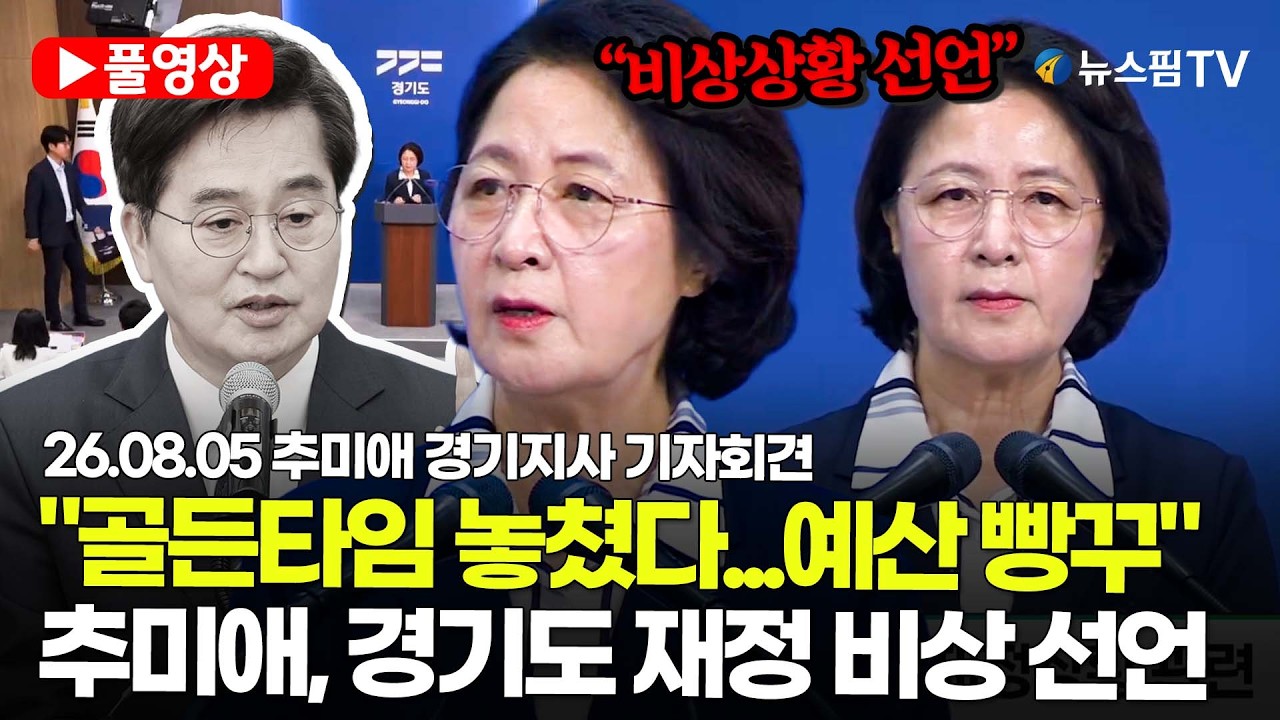
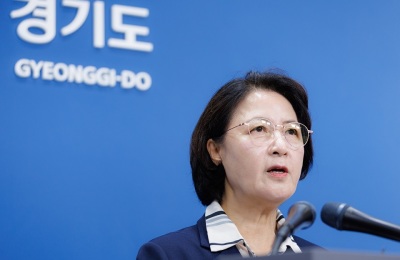
[수원=뉴스핌] 박승봉 기자 = 추미애 경기도지사가 5일 경기도의 재정 여건에 대해 공식적으로 '비상 상황'을 선언하고 강도 높은 세출 구조조정과 세입 구조 개선을 골자로 한 비상조치 추친 방안을 제시했다고 밝혔다.
추미애 경기도지사가 5일 경기도의 재정 여건에 대해 공식적으로 '비상 상황'을 선언하고 강도 높은 세출 구조조정과 세입 구조 개선을 골자로 한 비상조치 방안을 발표했다. [사진=경기도]
추 지사는 이날 경기도청 브리핑룸에서 기자회견을 열고 "경기도는 지금 새로운 공약사업을 추진하기는커녕 이미 진행 중인 민생 사업조차 온전히 유지하기 어려운 지경에 이르렀다"며 "지금 결단하지 않으면 2~3년 뒤 채무를 갚기 위해 또다시 지방채를 발행하는 악순환에 빠질 수 있어 '경기도 재정 비상 상황'을 선언한다"고 밝혔다.
도에 따르면 민선 8기 당시 경기도는 재정 부족을 이유로 노인장기요양, 소아응급 책임의료기관 육성, 유·초·중·고교 급식비, 시내버스 공공관리제 등 상당수 주요 민생·필수 사업의 올해 예산을 12개월분이 아닌 9개월분만 편성한 것으로 나타났다. 이에 따라 올해에만 약 7700억 원 규모의 감액추경이 필요한 실정이다.
경기도는 지난해 한도액의 99.6%에 달하는 9430억 원 상당의 지방채를 20년 만에 발행한 데 이어 통합재정안정화기금 조례를 개정해 남북협력기금 등 각종 기금 재원 5588억 원을 일반회계로 예탁·끌어다 쓰며 위기를 버텨왔다.
그러나 도 전체 예산 약 41조 7000억 원 중 도가 자체 활용할 수 있는 재원은 3조 5000억 원에 불과한 데다 세원의 절반 이상을 차지하는 취득세 수입이 2022년 11조 원에서 올해 8조 원 수준으로 급감했다.
아울러 3기 신도시 개발 세수 효과 감소, 반도체 등 인프라 투자 대비 법인지방소득세의 시·군 귀속 구조, 전체 예산의 49%에 달하는 복지 예산 증대 등이 맞물리며 구조적 재정 위기가 심화했다.
추 지사는 구조적 재정 위기 극복을 위해 ▲도지사 및 고위공직자 업무경비 감액 등 강도 높은 세출 구조조정 ▲일회성·선심성 행사 및 불요불급한 사업 전면 중단▲참모조직 및 공공기관 인력 효율적 재배치 ▲지방소비세 확충 및 국고보조사업 지방비 부담 개선 등 세입구조 정상화를 위한 4대 방안을 제시했다.
추미애 경기도지사가 5일 경기도의 재정 여건에 대해 공식적으로 '비상 상황'을 선언하고 강도 높은 세출 구조조정과 세입 구조 개선을 골자로 한 비상조치 방안을 발표했다. [사진=경기도]
다만 도민의 생명과 안전, 취약계층 보호를 위한 핵심 민생 예산은 끝까지 지켜내겠다고 약속했다.
추미애 지사는 "재정위기의 고통을 사회적 약자와 서민의 삶에 떠넘기지 않고 불필요한 지출부터 선제적으로 줄여나가겠다"며 "지금의 어려움을 다음 세대의 빚으로 넘기지 않고 경기도의 미래를 위한 전환점으로 만들기 위해 도의회 및 31개 시·군과 적극 협력하겠다"고 강조했다.
1141world@newspim.com
2026-08-05 11:21
 사진
사진
프로야구 전 경기 폭염 취소
[서울=뉴스핌] 남정훈 기자 = 극한 폭염이 프로야구까지 멈춰 세웠다. 경기장 곳곳에서 온열질환 의심 환자가 발생하고 관중이 의식을 잃고 쓰러지는 응급 상황까지 벌어지자 한국야구위원회(KBO)가 결국 리그를 일시 중단하고 긴급 대책 마련에 나섰다.
KBO는 5일과 6일 예정됐던 2026 신한 SOL KBO리그 1군 전 경기와 퓨처스리그 전 경기를 모두 취소한다고 발표했다. 취소된 경기는 잠실(NC-두산), 인천(LG-SSG), 대구(한화-삼성), 부산(키움-롯데), 광주(KT-KIA)에서 열릴 예정이던 5경기다.
[서울=뉴스핌] 폭염 속 응원을 하고 있는 삼성 팬들. [사진 = 삼성 라이온즈] 2026.08.05 wcn05002@newspim.com
KBO는 "최근 전국적인 폭염으로 관람객과 선수단의 안전을 위협하는 상황이 발생하고 있어 이를 엄중하게 인식하고 있다"라며 "6일 긴급 실행위원회를 열어 폭염 관련 리그 운영 방침과 안전 대책을 원점에서 논의할 예정"이라고 밝혔다.
이번 회의에는 KBO 사무국을 비롯해 10개 구단 단장과 한국프로야구선수협회 관계자들이 참석해 폭염 상황에서의 경기 운영 기준과 안전 대책을 전면 재검토할 계획이다.
당초 KBO는 전날 폭염 단계별 경기 운영 세칙을 새롭게 발표했다. 폭염주의보가 발효되면 경기를 정상 개최하고, 폭염경보가 내려질 경우 홈 구단 의견을 반영해 경기 시작 시간을 최대 1시간까지 늦출 수 있도록 했다. 또한 기상청이 올해 신설한 최고 단계인 '폭염중대경보'가 발효되면 경기 당일 오후 1시 이전 취소를 결정할 수 있도록 했다.
폭염중대경보는 하루 최고 체감온도 38도 이상 또는 최고기온 39도 이상이 예상될 때 발효된다. 이에 따라 전날 잠실 NC-두산전과 광주 KT-KIA전이 해당 기준이 적용된 첫 사례로 취소됐다.
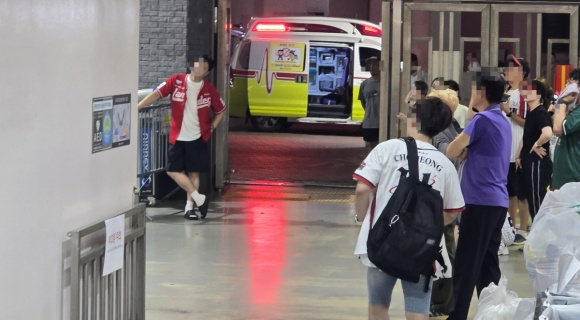
[인천=뉴스핌] 유다연 기자= 4일 인천 SSG랜더스필드에서 열린 SSG와 LG 경기 8회를 마친 후 한 관객이 온열질환으로 쓰러졌다. 해당 관객을 이송하기 위해 대기 중인 구급차의 모습. 2026.08.05 willowdy@newspim.com
그러나 다른 경기장에서는 더 심각한 상황이 발생했다. 인천 SSG랜더스필드에서 열린 LG와 SSG 경기에서는 총 25명의 관중이 온열질환 의심 증세를 호소하며 현장 치료를 받았다.
이 가운데 2명은 의식 저하 등 중증 증상을 보여 구급차로 병원에 이송됐다. 8회말에는 25세 남성 관중이 계단에서 의식을 잃고 쓰러져 경기가 약 9분간 중단됐고, 경기 종료 직전에도 26세 남성 관중이 응원석에서 쓰러지는 응급 상황이 발생했다. 다행히 두 번째 환자는 현장 안전요원의 응급조치 후 의식을 회복한 것으로 전해졌다.
경기장 안팎에서 온열질환 환자가 잇따라 발생하자 KBO는 기존 운영 방침만으로는 안전을 담보하기 어렵다고 판단했고, 결국 5일과 6일 예정된 1군과 퓨처스리그 전 경기를 모두 취소하는 초유의 결정을 내렸다.
이로써 올 시즌 폭염으로 취소된 KBO리그 경기는 15경기로 늘었고, 우천 등을 포함한 전체 취소 경기는 40경기가 됐다.
wcn05002@newspim.com
2026-08-05 13:32